
👋 I am a tech lawyer that breaks down fun and complex legal topics that companies should know. Subscribe below!
There was a Forbes piece recently that landed a little too close to home.
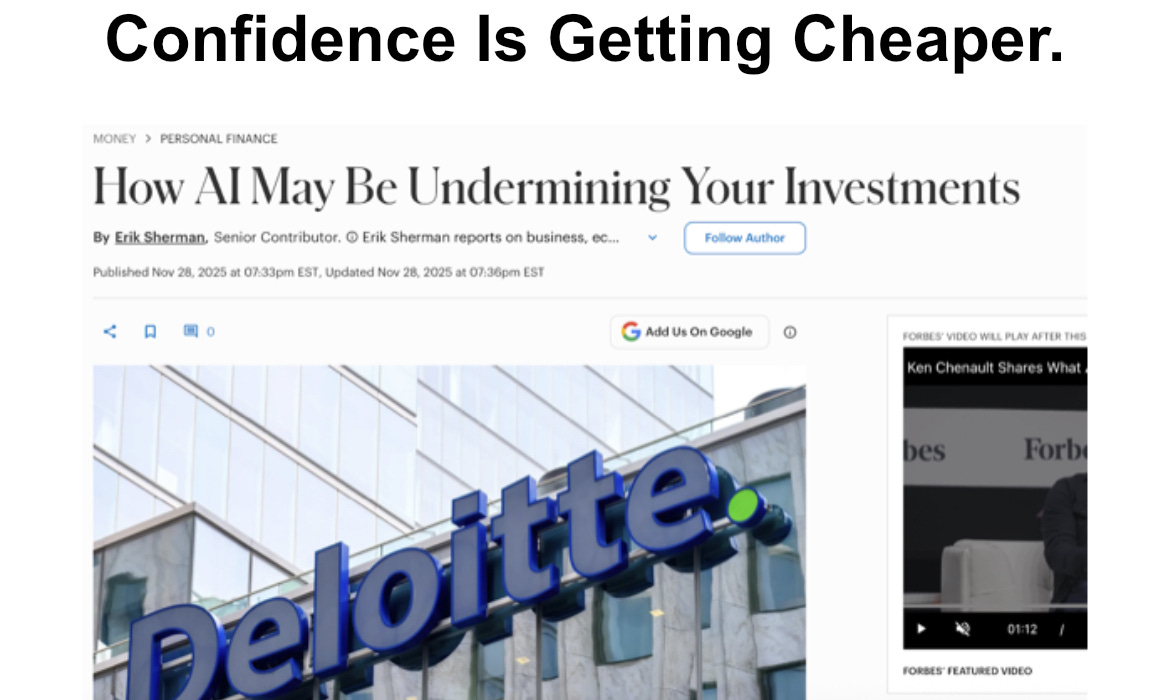
Not because it said anything radical, but because it described something a lot of people already know and don’t want to talk about: companies are making important decisions based on work that no one actually checked.
Not “reviewed carefully.” Not “pressure-tested.” Checked.
And the problem isn’t the tools. It’s the confidence.
It’s Sloppiness Wearing a Suit.
If you’ve sat through enough board meetings, diligence calls, or strategy reviews, you’ve likely seen this before:
A slide looks clean.
The analysis sounds reasonable.
There’s a citation at the bottom.
Everyone assumes someone else verified it.
Nobody wants to be the person who slows things down by asking, “Did we actually read the source?” So the assumption slides through.
That’s how bad ideas become “agreed-upon facts.”
The Legal Examples Are Just the Most Embarrassing Ones
The reason lawyers keep ending up in the news is simple: courts write things down. When a filing includes cases that don’t exist, or quotes that were never said, it’s visible. Public. Awkward.
But that same behavior happens every day outside the courtroom.
In internal memos. In market analysis. In technical reviews. In investment theses.
The difference is that nobody publishes those mistakes…until something breaks.
The Code Problem Is a Perfect Example
One of the more unsettling data points in the Forbes article came from academic research on software development.
A meaningful amount of automatically generated code references libraries that don’t exist.
Not obscure ones. Not outdated ones. Made-up ones.
Which means someone eventually:
patches it by hand
works around it
ships anyway
updates the documentation later (maybe)
From the outside, everything looks fine. From the inside, nobody is quite sure how things actually work anymore.
This Is How Messes Form Quietly
This kind of problem doesn’t announce itself. It shows up as:
rework no one can explain
“temporary” fixes that never go away
systems no one wants to touch
reports that don’t quite line up
diligence questions that suddenly get very specific
By the time leadership notices, the original mistake is buried under layers of confident follow-ups.
Everyone thought someone else had checked.
Why Investors Should Be Nervous (Even If Nothing Looks Broken)
Markets are great at pricing visible risk. They’re terrible at pricing quiet operational messes.
You don’t see this on earnings calls. You hear it later as:
“unexpected complexity”
“execution challenges”
“integration issues”
“longer-than-anticipated remediation”
Translation: we trusted something we shouldn’t have.
Consultants Don’t Automatically Save You
One uncomfortable point the Forbes piece hints at: outsourcing doesn’t magically fix this.
A polished deck with footnotes is still risky if nobody checked the footnotes. I’ve seen external reports that looked airtight and collapsed the moment someone asked where the numbers actually came from.
The issue isn’t who produced the work. It’s whether accuracy is someone’s job or just assumed.
Habits That Matter
The companies that avoid this don’t have better tools. They have better habits:
Someone is responsible for checking.
That person has time to do it.
Speed isn’t the only thing rewarded.
Saying “this isn’t ready” isn’t career-limiting.
Those sound basic, but they’re increasingly rare.
The Real Risk Isn’t Error
Mistakes happen. Always have.
The real risk is when mistakes look good enough to pass. When confidence replaces verification. When polish replaces proof. When nobody wants to be the person who slows things down.
That’s what the Forbes article is really pointing at, even if it doesn’t say it bluntly.
And that’s the part lawyers, investors, executives, and boards should be paying attention to now.
Not because something exploded.
But because nothing has…yet.